
S&P Global Ratings, one of the three major credit rating agencies, is considering a Nvidia credit downgrade, citing concerns about the company’s management and governance practices. The review places one of the world’s most valuable chipmakers under fresh scrutiny, even as its financial performance remains strong.
The agency expects to finish its review within 90 days. If it proceeds, S&P could cut Nvidia’s rating from AA to AA-, the fourth-highest on its scale.
What’s Driving the Review
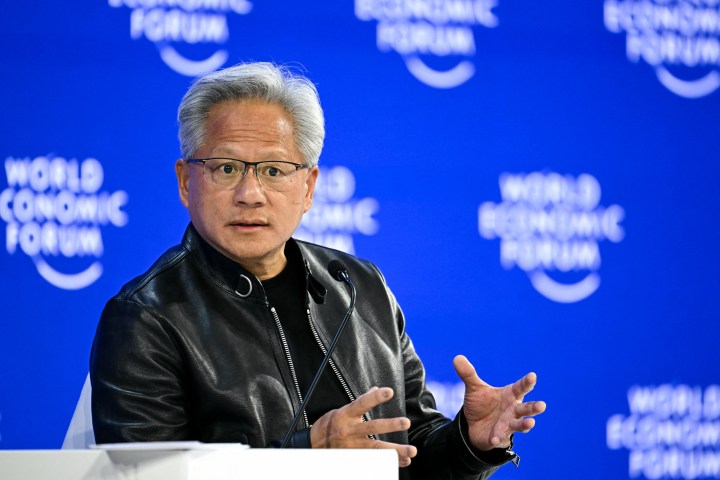
According to S&P, the ouster and reinstatement of CEO Jensen Huang raised concerns about “weak executive oversight and lack of succession planning.” The agency also pointed to “key man risk,” meaning Nvidia relies heavily on Huang for its future success.
In other words, the issue is not Nvidia’s balance sheet. It is the structure of leadership around its chief executive.
Governance and Succession Planning Concerns
S&P’s statement highlights two related weaknesses. The first is oversight: how executive decisions are monitored and checked. The second is succession planning: what happens to Nvidia’s leadership if Huang is no longer at the helm.
The ouster and reinstatement of Huang brought both questions into public view. For a company of Nvidia’s size and influence, S&P treats those gaps as material to credit risk.
Key Man Risk Explained
“Key man risk” describes a company’s heavy dependence on a single person. In Nvidia’s case, that person is founder and CEO Jensen Huang.
S&P’s concern is straightforward. If Nvidia’s future success is closely tied to one leader, any disruption to that leadership carries outsized risk, regardless of how well the business is performing today.
Nvidia’s Strong Financials Aren’t the Issue
The review is notable because it is not driven by weak financial results. Nvidia’s financial performance remains strong.
Instead, S&P is focused on management and governance practices. That distinction matters for readers: a credit rating reflects perceived risk, not just current earnings.
What a Downgrade Would Mean
Nvidia is certain to keep its investment-grade rating, even if S&P proceeds with the cut. Still, a downgrade could raise the company’s borrowing costs.
The effects could extend beyond Nvidia itself. Because Nvidia backstops neoclouds and other infrastructure companies that lack strong credit on their own, a lower rating could make their debt costlier or force them to post more collateral.
| Item | Detail |
|---|---|
| Agency | S&P Global Ratings |
| Current rating | AA |
| Potential rating | AA- |
| Review timeline | Within 90 days |
| Stated concerns | Weak executive oversight, lack of succession planning, key man risk |
The $500 Billion AI Infrastructure Financing
In August, Nvidia announced plans to arrange $500 billion in financing for AI infrastructure with six financial institutions, including Goldman Sachs, Apollo, and Blackstone.
Under the original terms, Nvidia would guarantee 25% of the loans. But even before Huang’s ouster and return, lenders had been demanding that Nvidia guarantee more, Bloomberg reported.
A downgrade would likely prompt lenders to demand even larger guarantees. That would shift more of the financial risk onto Nvidia and away from its lending partners.
How Guarantees Shape the Cost of AI Infrastructure
Nvidia’s guarantee commitments are central to how the financing is structured. When Nvidia backs a portion of the loans, lenders can extend credit to infrastructure companies that might otherwise struggle to secure it on favorable terms.
A lower credit rating changes that calculation. Lenders assess the strength of the guarantor, and a downgrade signals greater risk. In response, lenders may ask for larger guarantees, additional collateral, or both.
For the neoclouds and infrastructure companies involved, those demands translate directly into higher financing costs. The ripple effect reaches beyond Nvidia’s own balance sheet and into the broader buildout of AI infrastructure.
Why This Matters for the AI Ecosystem
Nvidia’s credit standing does not exist in isolation. The company sits at the center of a broad AI infrastructure buildout, and its guarantees help other companies obtain financing on better terms.
If lenders require larger guarantees after a downgrade, the cost of building AI infrastructure could rise for the companies that depend on Nvidia’s backing. That is why a two-notch shift on a ratings scale can carry implications well beyond one company’s borrowing costs.
The timing adds another layer of significance. Nvidia has committed to arranging $500 billion in financing, a figure that underscores how deeply the company is intertwined with the infrastructure layer of the AI economy.
What Investors and Lenders Are Watching
The review centers on governance, not earnings. That makes the outcome difficult to predict from financial statements alone.
Investors and lenders will be watching for signals about how Nvidia addresses S&P’s concerns. Succession planning and executive oversight are structural issues, and resolving them takes more than a strong quarter.
Lenders, meanwhile, will weigh the final rating when setting terms for the financing Nvidia has committed to arrange. If the downgrade proceeds, the terms could tighten.
What Happens Next
S&P expects to complete its review within 90 days. Until then, Nvidia retains its current rating, and the agency’s concerns remain subject to its final assessment.
The key questions are whether S&P sees sufficient governance safeguards and succession planning in place, and how lenders respond if the rating is cut. Both will shape the cost of the AI infrastructure financing Nvidia has committed to arrange.
For now, the Nvidia credit downgrade remains a possibility rather than a certainty. But the review itself signals that credit agencies are treating leadership concentration as a risk factor worthy of formal scrutiny, even at a company with strong financial performance.