

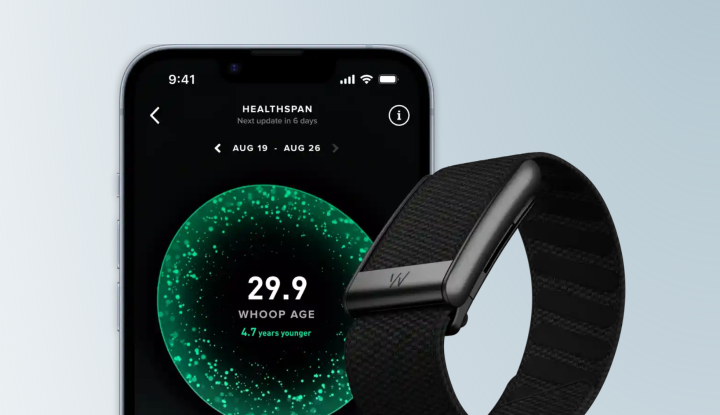
Whoop, the maker of screen-less fitness bands, launched a Whoop social network on Thursday, November 12, 2026, that lets its members follow friends and family and share their health data. The network, called Whoop Humans, is rolling out in the Whoop app to members at every membership tier at no extra cost.
The Whoop social network marks a shift from the company’s existing Teams feature toward something more private and personal. Members can follow anyone on Whoop and choose what to share, from sleep and recovery to workouts and achievements.
How the Whoop Social Network Works
Followers can react and comment, and members can attach photos and commentary to their data. Everything is opt-in, CEO Will Ahmed said. Members decide who follows them and who sees what, so a trainer can track a set of clients without the clients seeing one another’s data.
Whoop already offers Teams, which a little more than half its customers use, according to the company. But Teams is built around groups and leaderboards, where everyone in a group sees everyone else’s information. Humans is designed to be more intimate.
The Engagement Insight Behind Whoop Humans
Ahmed said beta members were more engaged when someone reported a low recovery score than a nearly perfect one. That suggests the feature may be particularly helpful for understanding when someone is struggling and might need attention.
Whoop’s Push Into Medical Wellness
The bigger story is where Whoop continues to be headed: into medical wellness. Like its most direct rival, Oura, the company is pushing faster and more aggressively into the wellness opportunity that an aging population presents.
Whoop had already added FDA-cleared ECG and atrial fibrillation detection, blood pressure insights, blood testing, and medical-record uploads. Ahmed said Whoop has seen “huge growth” among people over 60 over the past 18 months, without offering specifics. He also said Whoop was among the first companies accepted into a Medicare program that reimburses qualifying wearables that can show they improve health outcomes, and that it now has Medicare members.
Ahmed added that he expects families to be big users of Humans — imagine adult children checking in on aging parents.
Privacy Controls Inside the Whoop Social Network
The company’s efforts to be thought of as the “brand for personal health” raise natural questions about privacy. Ahmed said members choose which metrics to share, can remove followers, and can switch on “stealth mode” to go dark for a few days without changing their settings.
| Privacy Control | What It Does |
|---|---|
| Metric selection | Members choose which health metrics to share |
| Follower removal | Members can remove followers at any time |
| Stealth mode | Go dark for a few days without changing settings |
| Sensitive activities | Not shared by default |
| Health alerts | Health alerts and medical information are never shared |
| Reporting | Members can report disturbing comments or photos, which are reviewed |
As for minors, Whoop’s minimum age is 13 for all members (higher in some countries), meaning customers of that age can share their data subject to consents and privacy settings. Asked whether a parent could follow a teenager’s data, Ahmed didn’t answer directly and pointed to the privacy controls.
Ahmed also said Whoop doesn’t sell member data. “Our product is not you; it’s the membership,” he said, adding that the company doesn’t license data to third parties.
Dealmaking, Growth, and Retail Expansion
Ahmed was candid about dealmaking. Asked about Oura’s announcement this week that it will pay $625 million for Counsel Health, a service offering on-demand physicians, Ahmed said he expects “more consolidation” among AI-focused, clinician-focused, and wearable companies, and that Whoop is always on the prowl. Its deep relationship with members, he said, puts it “in a position to be an acquirer.”
He was more guarded about the company’s own finances, declining to share revenue or say whether Whoop is profitable. He did say the company now has about 1,200 employees, membership on its software platform has increased more than 70% a year for three years running, and that it expects to have nearly 4 million members by year-end.
As for an IPO, he said only that Whoop “will certainly IPO in the future.” He also wouldn’t comment on Oura, which shelved its own IPO of up to $2.2 billion in September citing market uncertainty.
Whoop Devices Coming to Ulta
Whoop is widening its reach. The company announced that its devices will be sold through Ulta stores beginning next March — around 500 locations of the beauty retailer to start, with a target to retail in more than a thousand stores eventually. Ahmed said Whoop’s female audience has more than doubled from last year.
Competition on the Horizon
In addition to Google’s new Fitbit Air band, Whoop may soon have to contend with Apple, which is reportedly developing a Whoop-style band. Ahmed mostly shrugged off those concerns, suggesting that building a product doesn’t guarantee success. Instead, he said, Whoop’s job is to stay true to the “aspiring” people it serves.
What the Whoop Social Network Means for Members
For existing members, the Whoop social network arrives at no extra cost and at every membership tier, which lowers the barrier to trying it. The opt-in design means members who prefer to keep their data private can simply stay out, while those who want accountability partners can invite a friend, a coach, or a family member into their circle.
The feature also fits Whoop’s broader strategy of positioning itself as a health brand rather than only a fitness tracker. By letting members share recovery and sleep data selectively, Whoop is betting that health accountability is more motivating when it happens within trusted relationships rather than public leaderboards.