

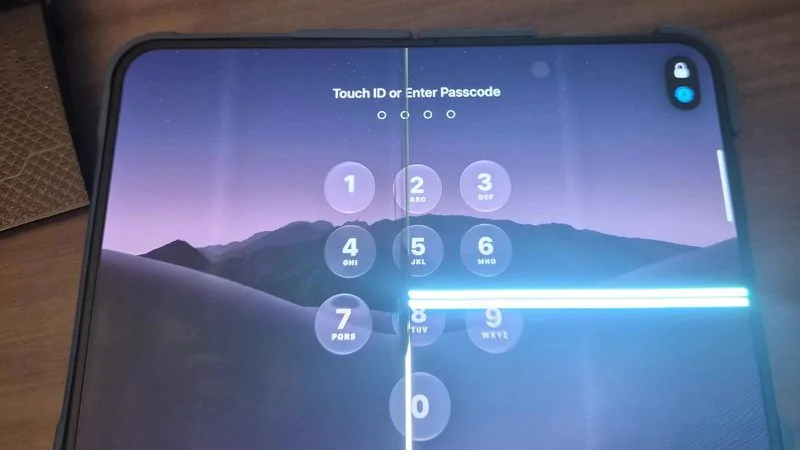
If your iPhone Duo develops the known inner display cracking issue, Apple may now perform an iPhone Duo display repair rather than replace the device entirely. The change marks a shift from Apple’s earlier approach to the problem.
Apple initially provided customers with a complete iPhone Duo replacement when their device showed the cracking defect. Now, Apple Stores and Apple Authorized Service Providers can order iPhone Duo parts, and Apple has advised technicians to attempt a repair before opting for a full replacement. The policy change has been noted by several customers across forums and social platforms.
Here is what the new iPhone Duo display repair process involves and what owners should expect.
What the iPhone Duo Display Repair Includes
For affected units, Apple appears to be replacing the following components:
The inner display
The inner display assembly with the hinge
Both batteries
That means the iPhone Duo display repair is not a simple screen swap. The inner display and hinge assembly are treated as one component that gets replaced together, which addresses concerns that a hinge defect could be causing the screen to bulge and crack.
Why the Hinge Matters
Some Apple customers have raised a technical point about the repair. If a piece of the hinge is making the screen bulge and break, the screen is not the problem by itself, and screen replacements alone will not help. Because the inner display and hinge assembly are replaced together, the new iPhone Duo display repair procedure appears to account for that concern.
Replacement Still Possible With AppleCare+ Express Replacement
A full replacement device may still be an option for some owners. You may be able to have a replacement iPhone Duo delivered through Apple’s Express Replacement Service if you have AppleCare+ coverage.
However, this option requires paying a fee as if the cracked display were accidental damage. U.S. pricing for that fee is set at $99. Owners who prefer a new device over an iPhone Duo display repair should weigh that cost against the convenience of express delivery.
Why Apple Changed Its Approach
It is standard procedure for Apple to stop offering whole-unit replacements by default once repair parts become available. This change was highlighted for the iPhone Duo in particular because of the known display cracking issue and because Apple’s earlier statement on the matter said customers would receive a replacement.
That gap between the original promise and the new repair-first policy is what has drawn attention from iPhone Duo owners. When Apple first acknowledged the cracking problem, the message was clear: affected customers would get a replacement device. The shift to an iPhone Duo display repair model changes that expectation, even if it follows Apple’s usual playbook for maturing products.
How Apple’s Repair Policy Usually Works
Apple typically moves through phases when a device develops a known issue. In the early stage, when parts are scarce and the problem is not fully understood, whole-unit replacement is the simplest path. Once parts become available and technicians are trained, the company shifts to component-level repairs.
The iPhone Duo has now reached that second phase. For Apple, an iPhone Duo display repair is more efficient and less costly than shipping out new units. For customers, the trade-off is a repaired device instead of a fresh one, which can feel like a downgrade on a flagship product.
What This Means for iPhone Duo Owners
If your iPhone Duo has a cracked inner display, the practical takeaway is simple: Apple will likely attempt an iPhone Duo display repair first, replacing the inner display, hinge assembly, and both batteries. A whole-unit replacement is no longer the default outcome.
If you have AppleCare+ and prefer a replacement device, ask about Express Replacement Service, but expect the $99 accidental damage fee in the U.S. Without AppleCare+, the iPhone Duo display repair route is likely your only option for addressing the cracking issue.
Reaction From the Community
The change has prompted debate among Apple customers. Some argue that a known defect should not require repair at all and that affected buyers should receive new replacements, especially given the device’s high price and flagship positioning. Others point out that repair-first is standard AppleCare+ practice and that replacement is not guaranteed for any Apple product with a defect.
One common concern is downtime. An iPhone Duo display repair means the device is out of the owner’s hands for some period, while a replacement arrives faster in many cases. Customers who live far from an Apple Store or authorized provider may find the repair process inconvenient, which is part of why the Express Replacement option matters.
Another point of debate is whether an iPhone Duo display repair fully solves the underlying problem. If the hinge is the root cause and it is replaced along with the display, the fix should hold. If the issue returns after repair, affected owners may push back harder.
Apple’s move to iPhone Duo display repair brings the foldable in line with how Apple typically handles repairs once parts are available. For owners dealing with a cracked inner screen, the outcome is now a component-level fix rather than a new device, unless AppleCare+ Express Replacement is used at the $99 U.S. fee.
Given the device’s price and the known defect, the policy is likely to remain a talking point among iPhone Duo owners. The key takeaway is to know your options before you need them: check your AppleCare+ status, understand what an iPhone Duo display repair covers, and decide whether express replacement is worth the fee if your screen cracks.