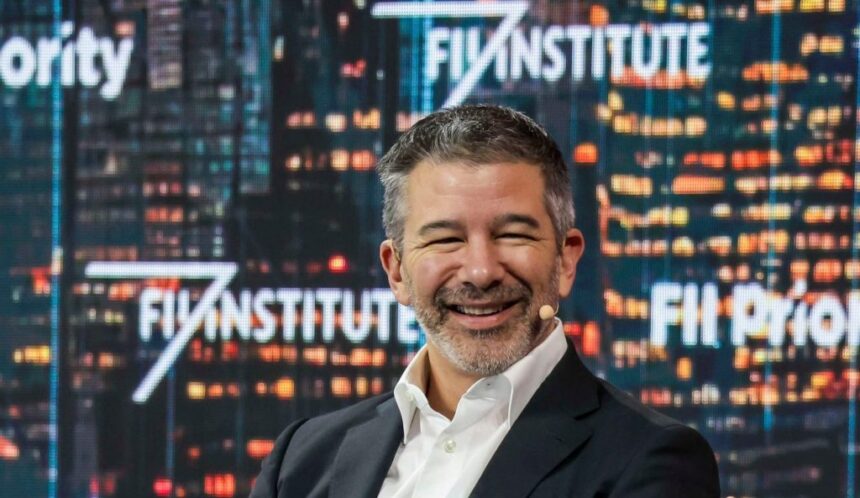
Travis Kalanick, the founder of Uber, has been relatively quiet about his latest venture, Atoms. That changed this summer when the startup announced a massive $1.7 billion funding round led by Andreessen Horowitz. While the capital injection was significant, Kalanick remained vague about his ultimate goals. Now, new reports are shedding light on the company’s Atoms robotaxi plans, and they point directly to the autonomous vehicle industry.
The Financial Times recently detailed Atoms’ evolving strategy. According to the report, the startup is preparing for a significant hiring spree and is exploring acquisitions. These moves would position Atoms as a major contender in the rapidly growing robotaxi sector. This represents a clear shift from the company’s previous public posture and aligns with Kalanick’s own description of the funding as “unfinished business.”
What We Know About Atoms Robotaxi Plans
The emerging Atoms robotaxi plans suggest that Kalanick is aiming to re-enter the transportation sector he helped revolutionize. Unlike his previous venture, which relied on human drivers, this new approach focuses entirely on autonomous technology. The company’s strategy appears to involve building proprietary self-driving systems that could eventually power a fleet of robotaxis.
Industry observers note that Kalanick’s experience gives him unique insight into the challenges and opportunities in ride-hailing. His understanding of driver dynamics, pricing models, and urban mobility patterns could give Atoms a competitive edge. The Atoms robotaxi plans seem designed to address the limitations of traditional ride-hailing while capitalizing on advances in artificial intelligence and sensor technology.
The $1.7 Billion Funding Round
Atoms’ massive funding round, led by Andreessen Horowitz, provides the financial firepower needed to execute ambitious Atoms robotaxi plans. Raising such a significant amount in the current economic climate signals strong investor confidence in Kalanick’s vision. The funding will likely support research and development, talent acquisition, and infrastructure buildout.
This capital positions Atoms to compete with well-funded rivals like Waymo, Cruise, and Tesla. The autonomous vehicle industry requires substantial investment in hardware, software, and testing. With over $1.7 billion in the bank, Atoms can afford to pursue aggressive development timelines and potentially acquire complementary technologies.
Atoms and Uber: A Strategic Partnership
One of the most intriguing aspects of this development is Atoms’ reported discussions with Uber. The Financial Times noted that Atoms has talked to the ride-hailing giant about using its robotaxi technology. This is notable given Kalanick’s history with the company he founded. Uber has already partnered with a long list of autonomous vehicle companies, making it a key potential partner for any new player.
Furthermore, the report confirmed that Uber has invested $100 million in Atoms, a figure previously verified by TechCrunch. This financial connection adds weight to the speculation that the two companies could work together more closely in the future. The investment suggests that Uber sees value in Atoms’ approach, even as it maintains relationships with other autonomous vehicle developers.
Why Uber’s Involvement Matters
Uber’s investment and potential partnership could accelerate Atoms’ path to market. Ride-hailing platforms provide the operational infrastructure, customer base, and real-world data that autonomous vehicle companies need to refine their technology. By integrating with Uber, Atoms could bypass the challenge of building a consumer-facing app from scratch.
The relationship also offers Uber a hedge against its other autonomous vehicle partners. Diversifying its technology suppliers gives Uber leverage in negotiations and ensures it has options if any particular partnership encounters difficulties. For Atoms, having Uber as a backer validates its Atoms robotaxi plans and provides a clear route to commercialization.
The Pronto Acquisition and Anthony Levandowski
Atoms’ push into autonomy also explains its acquisition of Pronto, an autonomous mining startup. Pronto was led by Anthony Levandowski, who previously served as Uber’s head of self-driving technology. Levandowski’s career has been marked by controversy; he was convicted of stealing trade secrets from Google and sentenced to 18 months in prison. However, he was later pardoned by President Donald Trump.
Bringing Levandowski and his team on board provides Atoms with significant technical expertise in autonomous systems. While the Financial Times emphasized that robotaxis do not represent the entirety of Atoms’ plans, this acquisition is a clear signal of their intent to compete in the space. Levandowski’s experience in building self-driving technology could prove invaluable as Atoms develops its own systems.
Building a World-Class Team
The planned hiring spree suggests that Atoms is serious about assembling top-tier talent. Autonomous vehicle development requires expertise in computer vision, machine learning, robotics, and sensor fusion. The company will likely compete with tech giants and established automakers for the best engineers and researchers.
Atoms’ ability to attract talent may depend on offering compelling compensation packages, intellectual freedom, and the opportunity to work with Kalanick. The startup environment can be attractive to engineers who want to make a significant impact without bureaucratic constraints. Additionally, the controversial nature of some key personnel might attract or deter certain candidates, depending on their perspective.
What This Means for the Robotaxi Industry
The news of Atoms’ potential entry into the robotaxi market comes at a time when the industry is heating up. Major players like Tesla, Waymo, and Cruise are already vying for dominance. Kalanick’s experience in building Uber, a company that revolutionized transportation, makes his new venture a threat to established incumbents.
With over $1.7 billion in funding and a clear strategy for growth, Atoms has the resources to make a significant impact. The planned hiring spree will likely focus on attracting top engineering and AI talent, which is crucial for developing reliable autonomous driving software. The company’s ability to secure partnerships, potentially including a deep integration with Uber, could accelerate its time to market.
Key Takeaways from the Atoms Announcement
Massive Funding: Atoms raised $1.7 billion led by Andreessen Horowitz.
Uber Investment: Uber has invested $100 million in the startup.
Talent Acquisition: The company is planning a hiring spree and has acquired Pronto.
Robotaxi Focus: Sources confirm that autonomous vehicles are a core part of Atoms’ strategy.
The Road Ahead for Kalanick
Travis Kalanick has a history of disrupting the transportation industry. With Atoms, he appears to be aiming for a repeat performance in the autonomous vehicle sector. While the company remains secretive about many details, the combination of substantial capital, key talent, and potential partnerships suggests that Atoms is serious about becoming a major player in the robotaxi business.
The “unfinished business” Kalanick referred to may well be his vision for the future of mobility. As Atoms moves forward with its hiring and acquisition plans, the industry will be watching closely to see how this new competitor shapes the landscape of self-driving transportation. The involvement of Uber adds another layer of complexity and potential for collaboration in a market that is still being defined.
Challenges and Opportunities
Executing ambitious Atoms robotaxi plans will not be without challenges. Regulatory hurdles, safety concerns, and technological limitations all pose significant obstacles. The company will need to navigate complex legal frameworks governing autonomous vehicles, which vary widely across different jurisdictions. Demonstrating the safety and reliability of its systems will be essential for gaining public trust and regulatory approval.
However, the opportunities are equally substantial. The global robotaxi market is projected to grow significantly in the coming years, with estimates suggesting it could reach billions in revenue. Atoms’ focus on this sector could position it for long-term success, especially if it can leverage Kalanick’s industry connections and experience. The company’s ability to adapt and innovate will determine whether its Atoms robotaxi plans become a reality or remain an ambitious vision.