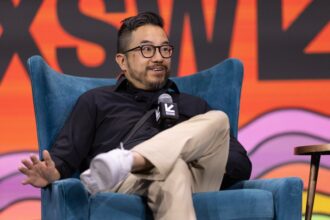
Former President Barack Obama is calling on Democrats to make artificial intelligence a central part of their agenda. He says the party must have a clear plan to address both the economic and safety concerns surrounding the fast-moving technology.
Obama made these remarks during a Democratic fundraising event where he was interviewed by House Minority Leader Hakeem Jeffries. According to a partial transcript of the event provided by Obama’s office, Jeffries asked the former president how congressional Democrats should approach AI.
The Obama AI safeguards message was direct: once Democrats regain the House majority, they need to put together a framework for a very public conversation.
Obama Warns AI Is Moving Fast in Private Hands
Obama did not mince words about the urgency of the issue. He noted that AI is “moving very fast in private hands” and warned that if lawmakers do not get on top of it, the consequences could be dangerous.
“If we don’t get on top of it, I think can be dangerous,” Obama said. “If we do get on top of it, I do think it’s beneficial.”
The former president also pointed to the potential upside of the technology. He said he genuinely believes AI will accelerate drug development in ways that can help cure diseases. That balanced perspective, acknowledging both risk and reward, is central to the Obama AI safeguards approach he is advocating.
Jeffries Backs Calls for Decisive Action
House Minority Leader Hakeem Jeffries responded to Obama’s comments in a statement. He said the former president “is correct that decisive action must be taken on artificial intelligence.”
Jeffries also criticized Republicans, saying they “have abdicated their responsibility to govern on behalf of the American people.” His support signals that Democratic leadership may be aligning around a more proactive stance on AI policy as the party looks toward regaining the House majority.
Obama Has Been a Sounding Board for AI Leaders
Obama’s engagement with AI policy is not new. He has offered himself as a sounding board to AI executives and has spoken with both Anthropic CEO Dario Amodei and OpenAI CEO Sam Altman.
Those conversations put him in a unique position to understand both the technical realities and the policy challenges. His calls for a clear plan come amid growing concern around AI safety, particularly after an AI researcher resigned from Anthropic and claimed that leading AI companies are “racing straight to self-improving superintelligence and gambling with our lives.”
Amodei Outlines Plan to Pace the Frontier
On Saturday, Amodei outlined a broad approach he called “pacing the frontier.” The plan would include giving independent safety evaluators access to leading AI companies and their models, as well as developing common safety standards between companies.
The proposal received positive reactions on social media. Altman said OpenAI would also commit to having independent evaluators with employee-like access. SpaceX CEO Elon Musk also appeared to respond positively to Amodei’s plan. These developments suggest that the Obama AI safeguards conversation is part of a broader push for accountability across the industry.
Trump Weighs In on AI Safety
President Donald Trump, meanwhile, discussed AI safety concerns with reporters at an Irish golf event on Sunday. He boasted that the United States is “the most sophisticated country in the world,” adding that he wants to keep it that way “because whoever wins AI wins.”
Trump also said, “And we can put guardrails. We can do this and that. But I think you have a lot of negative forces that are bringing it up that shouldn’t be bringing it up.”
Earlier this year, the Trump administration released a legislative framework for AI that would preempt state laws and shift the child safety burden to parents. The contrasting approaches between Obama and Trump highlight how AI policy is becoming an increasingly partisan issue.
What a Clear Plan Could Look Like
Obama’s call for a clear plan raises the question of what such a framework might include. Based on his comments and the broader policy discussion, several elements stand out:
Public conversation: Obama emphasized the need for a “very public conversation” about AI, suggesting that transparency and public input should be central to any framework.
Safety standards: The push for common safety standards between companies, as outlined by Amodei, could be part of a legislative approach.
Independent oversight: Giving independent evaluators access to AI models and companies is a key component of the pacing the frontier proposal.
Economic impact: Obama specifically mentioned concerns around the technology’s economic impact, suggesting that job displacement and economic disruption should be addressed.
These elements align with the Obama AI safeguards vision of ensuring that AI development benefits society while minimizing potential harms.
Why This Matters for the Future of AI Policy
The debate over AI safeguards is not just a technical issue. It touches on fundamental questions about who controls powerful technologies, how they are regulated, and what values guide their development.
Obama’s intervention signals that AI is becoming a top-tier political priority. His willingness to lend his voice to the debate could help shape how Democrats campaign on the issue and what legislation they pursue if they regain power.
For voters and industry leaders alike, the Obama AI safeguards message is clear: the time for vague promises is over. A concrete, actionable plan is needed to ensure that AI develops in a way that is safe, beneficial, and aligned with democratic values.
As AI capabilities continue to advance rapidly, the pressure on lawmakers to act will only grow. Obama’s call for a clear plan is a reminder that the window for proactive policymaking is narrowing.
Whether Democrats can unite around a coherent strategy remains to be seen. But the former president’s intervention has put the issue squarely on the party’s radar. For now, the Obama AI safeguards push serves as both a warning and an opportunity: the choices made today will shape the AI landscape for decades to come.