

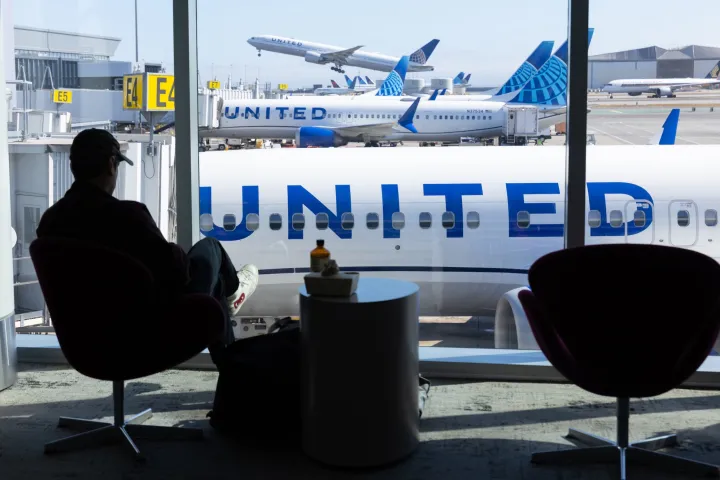
United Airlines AI agents will no longer be able to book flights or manage reservations on behalf of customers. The airline announced it is restricting access to third-party personal AI assistants, citing cybersecurity risks and concerns about undermining federal regulations.
The decision makes United the latest American corporate giant to prevent customers from using autonomous assistants to access its systems. It comes as airlines and banks struggle to tell the difference between real customers and AI systems operating on their behalf—especially when users share their logins with those assistants.
Why United Is Blocking AI Agent Access
United warns that sharing account credentials with personal, third-party AI assistants can expose sensitive information. The airline also cautions that actions taken by these tools may result in unintended purchases, account changes, or unauthorized use of MileagePlus miles.
Credential sharing sits at the heart of the problem. When a customer hands their login details to an AI assistant, those credentials can be leaked or exposed. Once that happens, the airline has little ability to verify who—or what—is acting on the account.
Federal Aviation Rules at Stake
Beyond security, United points to a regulatory concern. Federal aviation rules require that a human completes flight check-ins to acknowledge that their bags do not contain banned substances. An automated agent cannot provide that human acknowledgment, which puts the airline at risk of violating federal requirements.
United said it is taking steps to restrict access directly within its digital platforms and indirectly via travel agencies and aggregators. The goal is to prohibit use by unauthorized, third-party personal AI agents or assistants. The airline added that this work includes updates to its booking, ticketing, and distribution policies.
A Growing Industry Problem
United Airlines AI agents are not the only flashpoint. Banks have raised similar alarms. Bank of America recently urged customers not to share their passwords with their AI assistants, reflecting wider concern about credential sharing and autonomous systems acting on customer accounts.
For airlines and financial institutions alike, the challenge is verification. A login and password were once enough to confirm a customer’s identity. When an AI assistant holds those credentials, the institution can no longer be certain whether a human is making the request or a machine acting on the human’s behalf.
What This Means for Travelers
Travelers who rely on AI assistants to book or manage flights will need to handle these tasks directly through United’s official channels or authorized travel agencies. Sharing login credentials with third-party tools remains a security risk, and United is now actively working to block that access.
The airline’s stance signals a broader shift: companies are beginning to draw clear lines around what autonomous assistants can and cannot do inside their systems. For customers, the safest path is to keep credentials private and complete sensitive transactions—like flight check-in—personally.
United Airlines AI agents face a firm block as the carrier prioritizes cybersecurity and regulatory compliance over convenience. The move protects sensitive account data, prevents unintended purchases and mileage use, and ensures a human remains accountable at critical checkpoints like flight check-in. Whether other airlines follow United’s lead remains to be seen, but the pressure to address AI-driven access is clearly mounting across the industry.